; ?>)

Does Poly Blend Last Longer Than 100% Natural Fibres?
By Robin Blake — Sizing Expert Stylist & Founder of TellarDate: 2026
Always Honest, Unbiased, Unsponsored & Free Content.
The honest answer? Poly blends often survive longer, but natural fibres age better — and once you understand the difference, you'll never shop for fabric the same way again. I've made both mistakes over the years: the poly-blend work dress that pilled within three months of weekly wear, and the beautiful 100% merino cardigan I bought in 2016 that I'm still reaching for today. Fabric really does make or break a wardrobe investment, and it's worth knowing exactly what you're buying.
What "Lasting Longer" Actually Means
This is where most conversations about fabric get muddled. "Lasting longer" can mean two very different things:
Structural durability — resisting rips, shrinkage, and washing damage
Looking good over time — retaining shape, colour, and texture without deteriorating visually
Poly blends tend to win on the first front. Natural fibres — when they're quality — tend to win on the second. And for most of us building a wardrobe that actually works, the second one matters far more.
Where Poly Blends Have the Edge
I won't dismiss synthetics entirely — they genuinely have their place. A poly-cotton gym kit will outlast a pure cotton one through dozens of washes. A polyester lining holds its shape through daily wear in a way that pure silk won't. Here's where blends genuinely perform:
Abrasion resistance — synthetic fibres are incredibly strong under friction, which matters for things like bags, outerwear lining, or workwear
Wrinkle recovery — that poly-viscose work trouser holds its crease without constant ironing
Colour retention — synthetic dyes are very stable, so bright colours stay vibrant through more washes
Moisture and mildew resistance — polyester doesn't absorb water the way cotton does, meaning less mildew risk in storage
Lower cost per wear initially — for trend-led pieces you're not planning to keep long-term, a poly blend makes financial sense
Where Natural Fibres Win — and Win Convincingly
Here's the thing about quality natural fibres: when they go wrong, it's usually because they've been washed incorrectly or bought at a price point that didn't reflect actual quality. A £15 cotton T-shirt isn't a fair representative of what natural fibre can do. A properly constructed 100% wool blazer from a good brand, cared for properly? That thing will outlast most wardrobes.
They age beautifully — natural fibres develop a patina rather than degrading. Linen softens. Leather moulds. Cashmere becomes cosier. Poly just… pills.
They're breathable — which means less odour buildup, less frequent washing, and therefore far less wear-and-wash degradation
They're repairable — wool can be darned, cotton can be patched, and a good tailor can revive almost any natural fibre garment. Polyester? Not so much.
Better temperature regulation — natural fibres work with your body. Poly traps heat and sweat, which accelerates the degradation cycle of frequent washing
The Worst Offender: Low-Quality Poly Blends
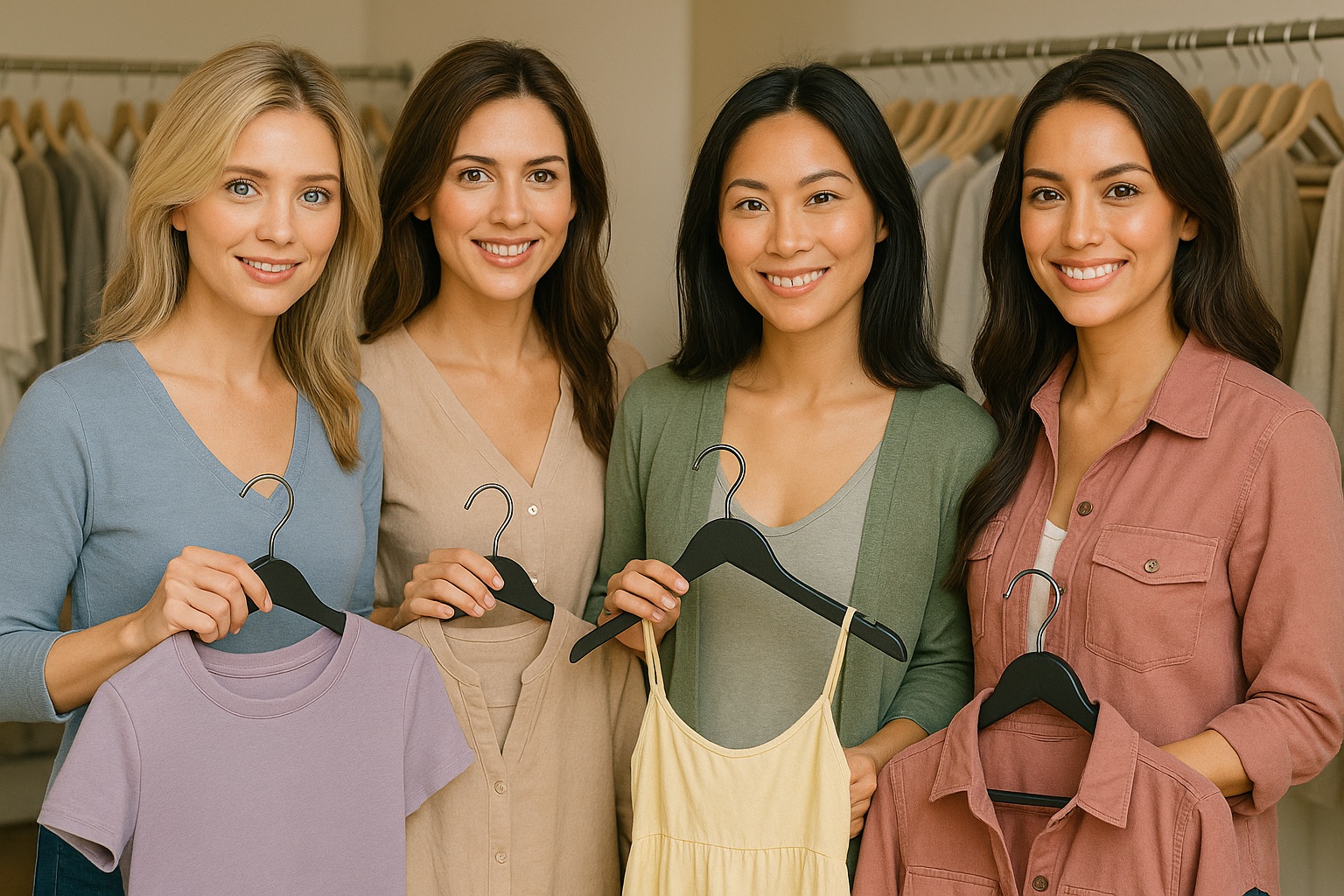
There's a category that performs badly in every way — and that's cheap fast fashion poly blends. I had a phase in my early twenties of buying endless synthetic occasion dresses at under £30 a pop. Within six wears, every single one looked tired: bobbled fabric, distorted hems, a slightly greasy sheen under bright light. It cost me far more in the long run than fewer, better pieces would have done. If you're going to buy a blend, the quality of the polyester matters. A high-grade poly-wool suiting blend from Massimo Dutti or Reiss is worlds away from a cheap viscose mix from a fast fashion brand.
Smart Brand Picks by Fibre Category
Here's where to shop if you're actively looking for fabric quality at different price points:
High Street (best for natural fibre quality at accessible prices):
M&S — genuinely underrated for cotton basics and wool knitwear. Their Pure Cotton and Pure Wool ranges are consistently good quality for the price
Boden — brilliant for 100% cotton prints, linen, and quality jersey. Their fabric compositions are always clearly labelled and honest
Cos — great for clean, minimal pieces in quality cotton, linen and wool. The fabric content is usually high and the pieces wash well
Jigsaw — a go-to for natural fibre knitwear and tailoring. Wool blends here are properly constructed
White Stuff — strong on linen and cotton, especially for warmer months. Their jersey fabric is notably better than most high street equivalents
Whistles — consistently good on fabric quality, especially for silk-blend and wool pieces at a mid-market price
The White Company — does exactly what it says on the tin: clean, high-quality cotton, linen and cashmere blends that genuinely last
Premium:
Massimo Dutti — their wool and cashmere-blend knitwear punches above its price point. Consistently reliable on fabric content
Reiss — well-constructed blends for tailoring. Their suiting uses quality poly-wool mixes that hold shape brilliantly
Me&Em — transparent about their fabric sourcing and consistently uses quality natural fibres. Their merino and linen pieces are excellent
Independent Labels Worth Knowing:
Thought Clothing — a brilliant independent brand built entirely around natural and sustainable fabrics: bamboo, organic cotton, hemp and Tencel. If you want natural fibre basics without the premium price tag, this is your brand
Sunspel — the original quality cotton T-shirt brand. Their piqué cotton is as close to "lasts forever" as you'll find at a non-designer price
Luxury/Designer:
Max Mara — their pure wool coats are the benchmark. Buy one, wear it for twenty years, pass it on
The Bottom Line on Fabric Longevity
For high-wear, high-wash items — activewear, everyday basics you'll wash twice a week — a good quality poly blend is practical and will hold up well. For investment pieces — knitwear, coats, blazers, tailored trousers — always go natural fibre if you can. The difference in longevity, look, and wearability is significant. And remember: the price per wear calculation almost always favours the more expensive, better-quality item in the long run.
Never Guess Your Size Again — Meet Tellar
One thing that makes buying quality pieces so frustrating? Sizing inconsistency. A size 12 in M&S is not a size 12 in Cos, and a size 12 in Reiss is something else entirely. That's exactly why Tellar.co.uk exists.
Tellar is the UK's leading free sizing tool — matching your exact measurements to over 1,500 brands instantly. Measure once using your bust, waist, and hip (or just use your existing size in a brand you know fits), and Tellar does the rest. No more size guide guessing, no more return headaches.
Use the Store Size Lookup tool to get your precise size in any brand — whether that's Cos, Jigsaw, Reiss, or 1,500+ others
Always free. No downloads. Works instantly in-browser.
No ads, no sponsored content — just honest, independent fashion advice
And while you're there, explore the Tellar Fashion Hub — a free library of posts from our in-house stylists covering every fashion question you've ever Googled. Honest. Unbiased. Independent. Always free.
A few posts worth bookmarking:
The Ultimate Clothing Sizing Guide — everything you need to know about finding your fit across brands
Jeans Trends 2026 — the denim edit worth knowing about
Visit tellar.co.uk — your sizing sorted, your wardrobe sorted.
The Tellar Fashion Hub is the World's Largest, 100% Free, Fully searchable, Fashion Library. Filled with 4000+ Honest & Unbiased posts, written by our expert stylists.
No adverts, no sponsored posts, no subscriptions. We are 100% free to use.
Honest, Unbiased, Accurate & Free.