; ?>)

How Brand Lock-In Distorts Consumer Choice and Why Free, Real-Time Sizing Data Changes Everything
By Robin Blake — Sizing Expert Stylist & Founder of TellarDate: 2025
Always Honest, Unbiased, Unsponsored & Free Content.
Introduction: The Hidden Economics of Ill-Fitting Clothes
Every consumer has experienced it: the frustration of ordering a size medium from one brand only to find it fits like a small, while another brand's medium hangs loose. This inconsistency is not accidental. It represents a calculated strategy by apparel brands that has quietly reshaped consumer behavior over decades, creating powerful switching costs that trap shoppers within brand ecosystems. The phenomenon known as vanity sizing, combined with proprietary sizing systems, has evolved from a marketing tactic into a sophisticated form of customer retention that operates largely beneath conscious awareness.
The global apparel industry, valued at approximately three trillion dollars, has built much of its customer loyalty infrastructure on sizing inconsistency. When a consumer discovers that they reliably fit into a particular size at a specific brand, they develop what economists call preference inertia, a reluctance to experiment with alternatives due to the perceived risk and effort involved. This inertia translates directly into reduced price sensitivity, higher lifetime customer value, and diminished competitive pressure.
Until recently, the architecture supporting this system remained largely unchallenged. Sizing databases existed, but they served business-to-business functions, operating behind paywalls and serving the needs of manufacturers and retailers rather than end consumers. The information asymmetry was stark: brands possessed detailed fit data across their competitors' product lines, while individual shoppers relied on guesswork, inconsistent size charts, and the expensive trial-and-error of returns.
The emergence of business-to-consumer sizing platforms, particularly those offering free, real-time access to comprehensive fit data, represents a fundamental disruption to this equilibrium. These platforms threaten to eliminate the friction that brands have cultivated, democratizing information that was previously the exclusive domain of industry insiders. The implications extend far beyond convenience, touching on market efficiency, environmental sustainability, and the basic bargaining power of consumers in the digital marketplace.
The Evolution and Mechanics of Vanity Sizing
Vanity sizing, the practice of labeling garments with smaller size numbers than their actual measurements would traditionally warrant, emerged as a distinct marketing strategy in the latter half of the twentieth century. Its psychological foundation rests on a simple premise: consumers experience positive affect when they fit into smaller sizes, and this emotional response can be leveraged to drive purchasing behavior and brand attachment.
The historical trajectory of vanity sizing reveals its systematic nature. Research examining vintage clothing patterns and standardized measurements from mid-century sizing guides demonstrates a clear inflationary trend. A size eight dress from 1958, for instance, corresponded to a bust measurement of approximately thirty-two inches, a waist of twenty-four inches, and hips of thirty-four inches. By the 1980s, those same measurements might correspond to a size four or even a size two. Today, they might fall into size zero or even the mathematically absurd double-zero category that some brands have introduced.
This grade inflation in sizing serves multiple strategic functions for brands. First, it provides immediate positive reinforcement at the point of purchase. When a consumer tries on a garment and discovers they fit into a smaller size than expected, they experience a small dopamine boost, a moment of validation that becomes cognitively associated with that particular brand. This emotional reward, however modest, influences subsequent purchase decisions, often below the threshold of conscious awareness.
Second, vanity sizing creates differentiation in an otherwise commoditized market. When sizing becomes sufficiently inconsistent across brands, the garment itself becomes less interchangeable. A consumer cannot simply decide they need a size medium shirt and purchase from any available source; they must instead remember which brands run large, which run small, and which align with their specific body measurements. This mental accounting raises switching costs and reduces the likelihood of experimentation with unfamiliar brands.
Third, and perhaps most importantly, vanity sizing generates proprietary customer data that reinforces brand loyalty over time. Once a consumer has invested the effort to determine their correct size within a brand's idiosyncratic system, that knowledge represents sunk cost. The consumer has already absorbed the trial and error, the returns, the fitting room time. Switching to a new brand means repeating this investment from zero, with no guarantee of success.
The mechanics of vanity sizing extend beyond simple label manipulation. Brands employ sophisticated approaches to fit that create distinct silhouettes and size runs. Some brands develop reputations for generous fits that appeal to consumers seeking comfort or those with larger frames. Others cultivate images of exclusivity through restrictive sizing that implicitly signals a target demographic. Athletic brands might emphasize different proportions than fashion-forward labels, creating size incompatibilities even at identical label numbers.
Crucially, the lack of standardization is international in scope. American sizing differs from European sizing, which differs from Asian sizing conventions. Even within these broad categories, individual brands deviate substantially. A European size 40 might correspond to anything from an American size six to a size ten depending on the brand, country of origin, and garment category. This babel of sizing systems creates enormous friction in the global marketplace and dramatically increases the information costs faced by consumers.
The problem compounds in the online shopping environment, which now accounts for an increasingly dominant share of apparel purchases. In physical retail, consumers could try garments before purchase, mitigating sizing uncertainty. Online shopping eliminates this option, replacing it with size charts that are often inaccurate, incomplete, or presented in formats that make cross-brand comparison difficult. The result is a returns crisis that afflicts the entire industry, with return rates for online apparel purchases ranging from twenty to forty percent, depending on category and retailer.
The Lock-In Effect: How Sizing Uncertainty Creates Behavioral Inertia
The economic concept of lock-in describes situations where consumers face substantial costs or barriers when switching from one product or service to another. These switching costs need not be purely financial; they can encompass time, effort, risk, and the cognitive burden of learning new systems. In the apparel industry, proprietary sizing systems create powerful lock-in effects that operate across multiple dimensions.
Consider the decision-making process of a consumer who has successfully purchased from a particular brand several times. They have learned, through experience, that they reliably fit into a size large in that brand's shirts, a size thirty-two in the brand's pants, and that the brand's jackets run slightly small, necessitating a size up. This knowledge did not come without cost. It required multiple purchases, perhaps several returns, and the mental effort of pattern recognition across different garment types.
Armed with this hard-won information, the consumer faces a choice when needing a new item of clothing. They can return to the familiar brand, where sizing is known and the risk of fit failure is minimal, or they can experiment with an alternative brand that might offer better prices, more appealing styles, or superior materials. The rational decision depends on weighing the potential benefits of switching against the risks and costs of doing so.
The risk calculation tilts heavily toward inertia. The potential benefits of trying a new brand are uncertain and probabilistic. The new brand might offer better value or superior products, but this is unknown in advance. Meanwhile, the costs of switching are immediate and guaranteed. There is the time cost of researching the new brand's sizing, the cognitive effort of interpreting unfamiliar size charts, the financial risk of purchasing a garment that does not fit, the hassle of returns, and the opportunity cost of time spent managing the exchange process.
Behavioral economics suggests humans are loss-averse, weighting potential losses more heavily than equivalent gains. In the context of apparel shopping, the pain of receiving an ill-fitting garment outweighs the pleasure of discovering a superior alternative. This asymmetry biases consumers toward familiar brands where sizing is known, even when those brands might not offer optimal value or quality.
The lock-in effect strengthens with each successful purchase from a given brand. Every positive experience reinforces the learned association between that brand and reliable fit, deepening the groove of habitual purchase behavior. Simultaneously, each additional purchase represents incremental sunk cost in brand-specific knowledge. A consumer who has determined their size across multiple garment categories within a single brand has invested substantially more effort than someone who has made a single purchase, and correspondingly faces higher switching costs.
Brands actively cultivate this lock-in through several mechanisms beyond sizing itself. Loyalty programs, typically structured around repeat purchases from a single retailer, amplify switching costs by adding financial penalties to brand-switching behavior. A consumer with accumulated points or tier status at a particular retailer faces the prospect of forfeiting these benefits when shopping elsewhere, creating an additional barrier to experimentation.
Email marketing and personalized recommendations further entrench existing shopping patterns. Once a brand captures a consumer's email and purchase history, they gain the ability to proactively market to that consumer with minimal incremental cost. Competing brands, meanwhile, must overcome the attention cost of breaking through to a consumer already receiving targeted communications from an incumbent. The result is a feedback loop where initial purchases beget more purchases, and shopping habits calcify into long-term loyalties.
The lock-in effect extends into social and psychological domains as well. A consumer who thinks of themselves as someone who wears a particular brand faces identity costs when considering alternatives. The garment is no longer merely functional; it has become a marker of self-conception.
From an industry perspective, these lock-in effects represent enormous value. Customer acquisition costs in apparel retail are substantial, encompassing advertising spend, promotional discounts, and the operational costs of serving new customers who are unfamiliar with brand offerings. Once acquired, however, locked-in customers deliver predictable revenue streams with minimal ongoing marketing investment. They exhibit higher lifetime values, lower price sensitivity, and reduced churn.
The strategic importance of lock-in explains why brands resist standardization efforts. Industry-wide sizing standards would dramatically reduce switching costs, making the market more efficient but also more competitive. Consumers could more easily comparison shop across brands, reducing the premium brands can extract from their captive customer bases. The current system, with its opacity and fragmentation, serves incumbent interests by raising barriers to entry and reducing competitive intensity.
The B2B Sizing Industry: Information Asymmetry as Business Model
While consumers struggle with sizing inconsistency, a sophisticated business-to-business industry has long existed to help brands and retailers navigate these same challenges. Sizing database companies, fit technology firms, and consulting services provide comprehensive fit data, competitor analysis, and sizing strategies to apparel businesses willing to pay for this information. This creates a stark information asymmetry: brands possess detailed knowledge about sizing across the competitive landscape, while individual consumers operate in relative ignorance.
The B2B sizing industry emerged from the operational needs of apparel manufacturers and retailers. When developing new product lines, brands need to understand how their sizing compares to competitors, which body types are underserved in the market, and how to construct size charts that will minimize returns while maximizing market coverage. This requires access to comprehensive data about competitor sizing, fit preferences across demographic segments, and return patterns associated with different size distributions.
Several established players dominate this space, offering subscription-based access to extensive sizing databases. These platforms collect data through multiple channels, including direct measurement of competitor garments, analysis of size charts and fit guides, aggregation of consumer review data, and in some cases, partnerships with retailers that provide access to transaction and return data. The resulting databases contain detailed specifications for thousands of garments across hundreds of brands, updated regularly to reflect new product launches and seasonal collections.
The business model is straightforward: brands and retailers pay substantial recurring fees for access to this intelligence, which they use to inform product development, sizing strategies, and competitive positioning. The value proposition rests on the significant cost of independently gathering this data. Purchasing and measuring competitor garments across multiple size runs, maintaining up-to-date databases, and analyzing fit patterns requires dedicated resources that most individual brands prefer to outsource.
From a market structure perspective, this B2B model creates a winner-take-all dynamic. The value of a sizing database increases with its comprehensiveness, creating network effects that favor large incumbents. A database covering fifty brands is less useful than one covering five hundred brands, but the cost of data collection scales linearly with coverage. This drives consolidation and creates high barriers to entry for new competitors.
Critically, the B2B model depends on excluding consumers from accessing this data. If sizing information were freely available to end users, the value proposition to brand subscribers would diminish. Brands pay for informational advantage, the ability to understand the competitive landscape better than their customers do. Making this information public would level the playing field, reducing the strategic value of the data and threatening the revenue model of database providers.
This dynamic explains the historical absence of consumer-facing sizing platforms. The companies with the most comprehensive data had strong incentives not to make it publicly available, while the fragmented nature of sizing information made it difficult for consumer-oriented startups to assemble competitive databases without substantial funding. The result was a persistent market failure: valuable information existed but remained locked away from the consumers who would benefit most from accessing it.
The situation bears resemblance to other markets characterized by information asymmetry between industry participants and end consumers. In financial services, for example, institutional investors long enjoyed access to research, data, and trading tools that retail investors could not access. The gradual democratization of financial information through platforms like Bloomberg Terminal and eventually low-cost online brokerages fundamentally altered market dynamics, increasing efficiency and shifting bargaining power toward consumers.
The insurance industry provides another parallel. Historically, insurance companies possessed far more information about risk, pricing, and competitor offerings than individual consumers, allowing them to capture substantial rents through opacity. The emergence of insurance comparison websites disrupted this model by aggregating previously scattered information and making it accessible to consumers at zero cost, intensifying competition and compressing margins.
In each case, the dissolution of information asymmetry triggered by technology-enabled data aggregation fundamentally restructured market relationships. Incumbents initially resisted these changes, recognizing that transparency would pressure their business models. Eventually, market forces and consumer demand overwhelmed these resistance efforts, ushering in new competitive equilibria with different winners and losers.
The apparel industry now stands at a similar inflection point. The technical barriers to creating consumer-facing sizing databases have fallen dramatically. Machine learning algorithms can extract sizing information from disparate sources, cloud computing infrastructure enables real-time data access at scale, and mobile applications provide user-friendly interfaces for complex data. The question is no longer whether consumer-facing sizing platforms are technically feasible, but rather how quickly they will achieve the scale and adoption necessary to disrupt existing market structures.
The Business-to-Consumer Revolution: Democratizing Fit Data
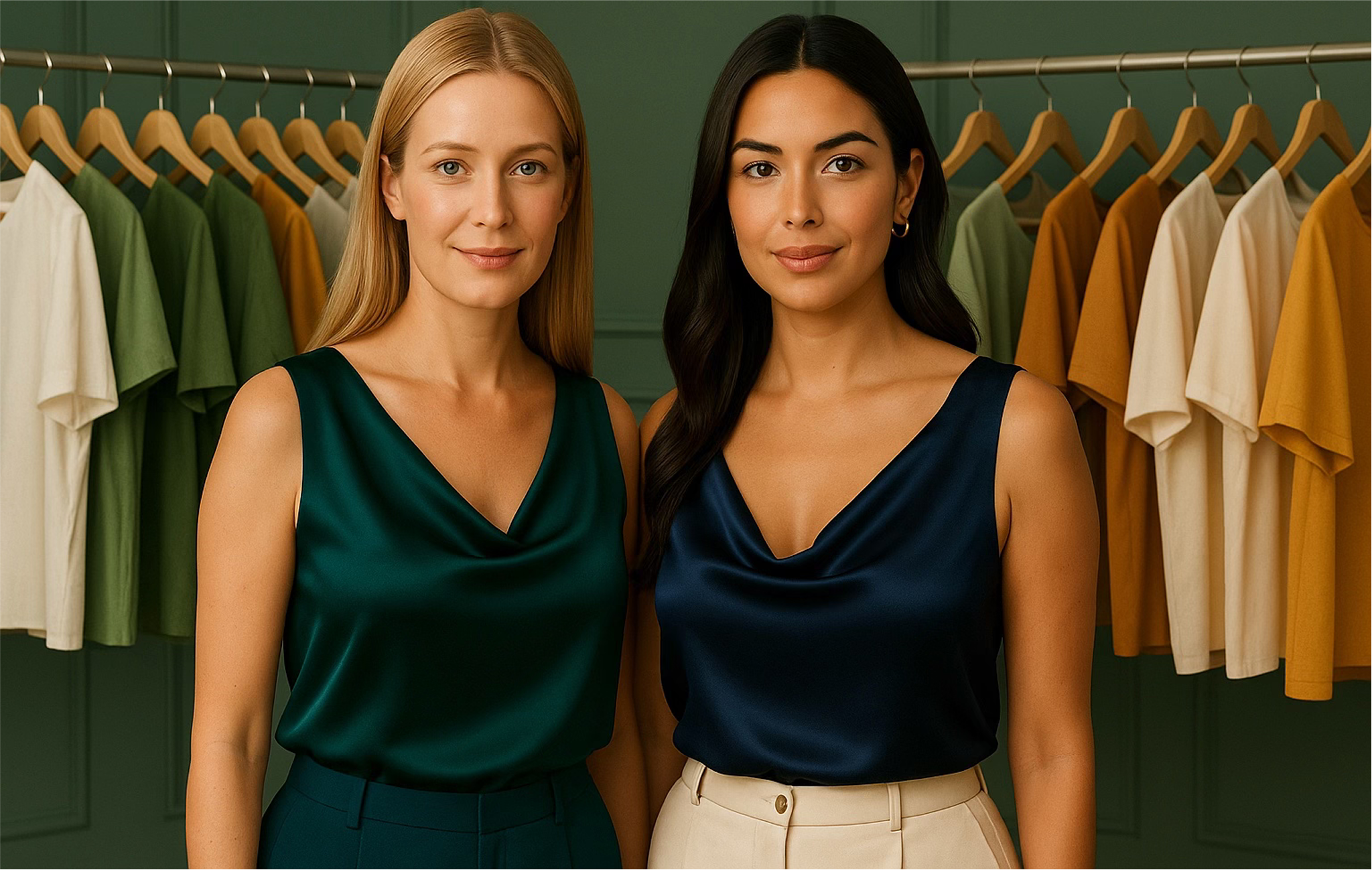
The emergence of business-to-consumer sizing platforms represents a fundamental challenge to the information asymmetry that has long characterised the apparel industry. By making comprehensive fit data freely available to individual consumers in real-time, these platforms threaten to eliminate the switching costs and lock-in effects that brands have cultivated for decades. The implications extend across multiple dimensions of market structure and consumer behaviour.
Tellar exemplifies this new category of consumer-facing sizing platforms. Unlike traditional B2B sizing services that charge brands for access to competitor data, Tellar.co.uk provides free, real-time access to sizing information directly to consumers. The platform aggregates fit data across hundreds or thousands of brands, allowing users to compare sizing, understand how garments from unfamiliar brands might fit their body type, and make more informed purchasing decisions without the trial-and-error that traditionally characterized apparel shopping.
The business model innovation here is significant. By orienting toward consumers rather than brands, Tellar inverts the traditional value flow in the sizing data market. Rather than brands paying to understand their competitors and customers, consumers access information for free to understand brands.
The free access component is particularly crucial. Many consumer services that aggregate comparison data charge subscription fees, limiting adoption to the most motivated users. By eliminating this barrier, a free platform can achieve broader market penetration, creating network effects where value increases with the number of users and amount of contributed data. As more consumers use the platform and provide feedback on fit accuracy, the underlying algorithms improve, making the service more valuable to subsequent users.
Real-time data access distinguishes modern platforms from previous attempts to address sizing inconsistency. Static size charts and occasional fit guides have long been available through various channels, but they quickly become outdated as brands adjust their sizing or launch new product lines. Real-time platforms continuously update their databases, ensuring information remains current and accurate. This is essential in the fast-fashion era where brands launch new collections monthly or even weekly.
The technical architecture enabling these platforms combines several components. Data ingestion systems scrape size charts from brand websites, parse product specifications, and extract measurements from disparate formats. Machine learning models process this raw data to normalize measurements across different conventions, identify patterns in how brands size relative to each other, and predict fit for garments where complete specification data is unavailable.
User-contributed data provides another critical input stream. When consumers provide feedback on how garments actually fit their bodies compared to predicted fits, this information refines the platform's algorithms. Over time, the system learns which brands consistently run large or small, how sizing varies across different garment categories within the same brand, and which body types are well-served or underserved by particular labels.
The user experience design of these platforms must balance comprehensiveness with usability. Presenting raw measurement data would overwhelm most users and replicate the problem they face when consulting individual brand size charts. Effective platforms translate technical measurements into intuitive recommendations: "Based on your profile, you typically wear a size medium, but for this brand, we recommend ordering a large." This abstraction of complexity is essential to driving mainstream adoption.
Mobile applications represent the optimal interface for real-time sizing data. Consumers increasingly shop on mobile devices, often while browsing in physical stores or competing online retailers. A mobile-first sizing platform integrates seamlessly into existing shopping behavior, allowing users to quickly check fit predictions without interrupting their purchase journey. Push notifications can alert users to sales or new arrivals from brands that fit their body type, creating engagement beyond individual purchase occasions.
The competitive landscape for consumer-facing sizing platforms remains nascent but is rapidly evolving. First movers like Tellar have the opportunity to establish network effects and brand recognition before the market becomes crowded. However, potential competitors include established technology companies with existing consumer bases, traditional B2B sizing firms considering pivots toward consumer markets, and retailers who might integrate sizing intelligence into their own platforms to reduce returns and increase conversion.
The value proposition to consumers is multifaceted. Most obviously, better sizing information reduces the likelihood of purchasing garments that do not fit, saving money on returns and reducing the frustration of the exchange process. This is particularly valuable in online shopping, where consumers cannot try before buying. For occasional shoppers, the time savings alone justifies adoption. For frequent apparel purchasers, the accumulated benefit over multiple shopping occasions becomes substantial.
Beyond individual transaction value, comprehensive sizing data fundamentally alters consumer bargaining power. When shoppers can easily identify which brands offer the best fit for their body type across multiple price points and style categories, they are no longer captive to familiar brands where sizing is known. This information liquidity makes the market more efficient, allowing consumers to optimize across multiple dimensions simultaneously: price, quality, style, and fit.
The environmental implications merit consideration as well. The apparel industry's returns crisis imposes enormous environmental costs. Returned garments often cannot be resold as new and may ultimately be destroyed or sent to landfills. The transportation associated with returns generates carbon emissions, while the processing and handling of returns consumes energy and resources. By reducing fit-related returns, comprehensive sizing data could meaningfully decrease the industry's environmental footprint.
Market Impact: How Free Fit Data Disrupts Brand Economics
The widespread adoption of free, consumer-facing sizing platforms would trigger cascading effects throughout the apparel industry's value chain. These impacts would reshape brand strategies, alter competitive dynamics, and redistribute value between brands and consumers. Understanding these mechanisms illuminates both the resistance these platforms are likely to encounter and the ultimate magnitude of the disruption they represent.
The most immediate impact would manifest in reduced customer lock-in and increased brand switching. As discussed earlier, sizing uncertainty creates substantial switching costs that trap consumers within familiar brand ecosystems. When these costs evaporate through the availability of comprehensive fit data, consumers become more willing to experiment with alternative brands. A shopper who previously returned repeatedly to a known brand for basic t-shirts might now confidently purchase from a lower-priced competitor, secure in the knowledge that sizing has been accounted for.
This increased switching behaviour would intensify price competition across the industry. When consumers can easily comparison shop across brands with confidence that sizing has been normalized, price becomes a more salient purchase driver. Brands that have historically commanded premiums partly through lock-in effects would face pressure to either reduce prices or more convincingly justify their premium through quality, design, or other differentiating factors that remain valuable in a transparent market.
The impact would vary significantly across brand segments. Luxury and premium brands that compete primarily on status, design, and material quality might weather the transition relatively well, as their value propositions extend beyond utilitarian fit and function. Mass-market brands that have relied heavily on convenience and familiarity would face more substantial challenges. Middle-market brands occupying ambiguous positions might experience the most disruption, as consumers use newfound information to either trade down to cheaper alternatives or trade up to demonstrably superior offerings.
Customer acquisition economics would shift fundamentally. Currently, brands invest heavily in acquiring new customers, knowing that successful initial purchases often lead to repeat business through lock-in effects that amortize acquisition costs across multiple transactions. If lock-in effects diminish, brands cannot count on the same lifetime value from acquired customers, making current acquisition spending less justifiable. This could lead to reduced marketing expenditures across the industry, with downstream effects on advertising platforms and media companies that currently depend on apparel brand spending.
Simultaneously, the importance of customer experience and product quality would increase. In a more transparent, competitive market where switching costs are low, brands must earn repeat purchases through superior products and experiences rather than relying on the inertia created by sizing opacity. This could drive quality improvements across the industry as brands invest in better materials, construction, and customer service to differentiate themselves in ways that remain meaningful when fit uncertainty is eliminated.
The returns crisis that currently afflicts online apparel retail would likely moderate as fit accuracy improves. While consumers would still return items for reasons unrelated to fit, such as color preference or style regret, the large portion of returns attributed to sizing issues would decrease substantially. This would reduce operational costs for retailers and brands while also easing the environmental burden discussed previously. The benefits would accrue primarily to large online retailers and direct-to-consumer brands for whom returns represent a significant cost center.
However, some brands might experience increased return rates in the short term as consumers empowered by better sizing information become more discriminating about fit. Previously, a consumer might have accepted a somewhat imperfect fit from a familiar brand due to the hassle of returns and uncertainty about finding better alternatives. With comprehensive fit data available, that same consumer might more readily return the imperfect garment and order from a brand predicted to offer superior fit. This dynamic could create transition pain for brands whose sizing does not align well with their customer base.
The strategic importance of sizing itself would evolve in complex ways. On one hand, brands could no longer rely on proprietary sizing systems to create lock-in, reducing the defensive value of idiosyncratic approaches to fit. On the other hand, brands that develop reputations for excellent fit for particular body types could benefit from increased visibility in sizing platforms, attracting customers who previously never discovered them. This suggests possible market segmentation where brands increasingly specialize in serving particular body types exceptionally well rather than attempting to serve broad markets adequately.
Standardization pressure would intensify, though likely not toward a single universal standard. As sizing data becomes more transparent and comparable, brands may gravitate toward sizing conventions that are more consistent with competitors in their segment to avoid appearing as outliers. However, the persistence of different body types and style preferences suggests the market can support multiple sizing paradigms as long as these are clearly communicated and easily translated through platforms like Tellar.
The power dynamics between brands and retailers would shift as well. Currently, brands possess better information about competitor sizing and can use this knowledge in negotiations with retailers. As this information becomes publicly available through consumer platforms, retailers gain better visibility into the competitive landscape, potentially improving their bargaining position. Multi-brand retailers might also use sizing data to optimize their brand mix, preferentially stocking brands whose sizing best serves their customer base.
New business models might emerge that would be unviable under the current regime of sizing opacity. Body-type-specific curators could aggregate brands that fit particular proportions well, creating value through editorial selection rather than inventory holding. Virtual fitting room technologies could integrate with comprehensive sizing databases to provide highly accurate fit predictions based on 3D body scans. Subscription services could more confidently source from multiple brands knowing that sizing has been normalized across their supply base.
Technical Architecture: Building Consumer-Facing Sizing Platforms
Creating a consumer-facing sizing platform that delivers real-time, comprehensive fit data requires sophisticated technical infrastructure across multiple domains. The technical challenges span data acquisition, processing, storage, algorithmic prediction, and user experience design. Understanding these components illuminates both the barriers to entry for competitors and the competitive moats that successful platforms can establish.
Data acquisition represents the foundational challenge. Sizing information exists in highly fragmented, heterogeneous formats across thousands of brand websites and retail platforms. Some brands provide detailed size charts with measurements in inches or centimeters across multiple body dimensions. Others offer only vague guidance about fit characteristics like "runs small" or "generous cut." Still others provide no sizing information beyond label sizes, requiring inference from other sources.
Automated web scraping provides one approach to data collection. Sophisticated scraping systems navigate brand websites, identify size chart pages, extract measurement data, and parse it into structured formats. This requires robust infrastructure to handle rate limiting, dynamic content loading, anti-scraping countermeasures, and the enormous variety of page layouts and data presentations across different sites. Machine learning models trained on thousands of size charts can help identify patterns and extract information even from inconsistently formatted sources.
Direct data partnerships with brands and retailers offer an alternative or complementary channel. Some brands might provide sizing specifications through APIs or data feeds, particularly if they perceive value in increased visibility on sizing platforms. However, establishing these partnerships requires business development resources and may prove challenging when approaching brands that view comprehensive sizing transparency as threatening to their customer retention strategies.
User-contributed data provides valuable supplementary information that corrects for inaccuracies in official brand sizing and captures fit nuances that simple measurements cannot convey. When users report how garments actually fit relative to predictions, this feedback trains machine learning models to improve future predictions. However, user-contributed data requires careful quality control to filter out unreliable reports, statistical techniques to aggregate conflicting inputs, and thoughtful user experience design to motivate contributions without creating excessive friction.
Data processing and normalization present substantial technical challenges. Different brands measure garments differently, even when they provide detailed specifications. One brand might measure chest circumference at the narrowest point under the arms, while another measures at the fullest point of the bust. Some measurements are taken with garments laid flat and multiplied by two, others are circumference measurements taken with the garment hanging. These methodological differences must be understood and corrected to enable accurate cross-brand comparisons.
Machine learning models can help normalize measurements by learning typical relationships between different measurement approaches and inferring missing measurements based on available data. For example, if a dress provides bust and hip measurements but not waist measurement, a model trained on thousands of dresses can predict the likely waist measurement based on observed correlations. Similarly, models can translate between different sizing conventions, such as US numerical sizes, US letter sizes, European numerical sizes, and UK sizes.
The database architecture must support rapid queries across millions of garments while continuously ingesting new data and updates. Time-series storage is necessary to track how sizing evolves within brands over time, as many brands adjust their sizing gradually. Geographic variation must be captured, as some global brands size differently for different regional markets. The system must handle both current products and historical items to serve users shopping secondhand markets or trying to replace beloved garments that have been discontinued.
Fit prediction algorithms represent the platform's core intellectual property and primary source of competitive advantage. These algorithms take as input a user's body measurements and fit preferences, along with specifications for a particular garment, and output a prediction of how that garment will fit. Simple rule-based approaches based purely on measurements prove insufficient because fit is subjective and multidimensional. A garment can technically "fit" someone according to measurements while feeling uncomfortable or unflattering due to fabric properties, cut, rise, sleeve length, or dozens of other factors.
Advanced approaches employ collaborative filtering techniques borrowed from recommendation systems. These models identify users with similar body types and fit preferences, then leverage their collective experience to predict how a given garment will fit a new user. If many users with similar measurements to yours report that a particular brand runs small, the algorithm can incorporate this signal even without perfect measurement data. This approach becomes more accurate as the user base grows, creating network effects that benefit market leaders.
Deep learning models can capture complex, nonlinear relationships between body measurements, garment specifications, and fit outcomes. These models might analyze garment images to infer construction details that affect fit but are not captured in size charts. They can learn that certain fabric compositions tend to stretch or shrink, that particular silhouettes work better for certain body proportions, and that brand-specific fit characteristics persist across product categories.
The user interface must abstract this technical complexity into intuitive, actionable guidance. Most consumers lack the expertise or patience to interpret detailed measurement comparisons. Effective interfaces might simply display: "Your size in this brand: Medium" along with a confidence interval and the option to drill down into more detail if desired. Visual representations like fit gauges showing where a garment falls on spectrums from "tight" to "loose" communicate more intuitively than raw numbers.
Personalization enhances value by learning individual preferences over time. Some users prefer tighter fits while others favor roomier silhouettes. Some prioritize certain body areas, like ensuring adequate sleeve length, while others are more concerned with torso fit. By tracking which predictions users found accurate and which garments they ultimately kept versus returned, the system builds user-specific models that improve with engagement.
Mobile optimization is essential given shopping behavior patterns. The platform must deliver sub-second response times even when querying large databases, require minimal data entry from users, and integrate seamlessly with mobile shopping workflows. Features like barcode scanning to instantly retrieve sizing information for products encountered in physical stores or automatic detection of products when browsing brand websites reduce friction and increase utility.
Privacy and data security considerations loom large when handling body measurement data and shopping behavior. Users must trust that sensitive information will not be misused or inadequately protected. Robust security infrastructure, transparent data policies, and clear user control over what data is collected and how it is used are necessary both for ethical reasons and to build the trust required for mainstream adoption.
The technical infrastructure must scale efficiently to support millions of users querying billions of garment-user fit combinations in real time. This requires distributed computing architectures, intelligent caching strategies, and continuous optimization of database queries and model inference. The cost structure must support free access for consumers while remaining economically sustainable, necessitating efficient use of computational resources.
Consumer Behavior Transformation: Liberation from Brand Captivity
The psychological and behavioral effects of access to comprehensive, real-time sizing data extend beyond the transactional mechanics of individual purchases. These platforms have the potential to fundamentally reshape how consumers relate to brands, perceive value, and construct their shopping identities. Understanding these deeper behavioral shifts illuminates the full scope of market transformation that consumer-facing sizing platforms might trigger.
At the most basic level, comprehensive fit data reduces purchase anxiety, particularly in online shopping contexts. Currently, ordering clothing online involves substantial psychological friction. Consumers must assess not only whether they like a garment aesthetically but also estimate the probability it will fit, weigh the hassle of returns, and accept the risk of disappointment. This cognitive burden increases the activation energy required to complete a purchase, particularly for consumers shopping with unfamiliar brands.
When reliable sizing information is available, much of this anxiety dissolves. Consumers can proceed with purchases confident that fit has been adequately addressed, focusing their evaluation on other dimensions like style, quality, and price. This reduced friction should increase conversion rates and average order values, as consumers purchase more readily when sizing uncertainty has been eliminated. The psychological benefits extend beyond individual transactions, as reduced anxiety around online clothing purchases increases overall category engagement.
The relationship between consumers and brands shifts from dependent to transactional when sizing opacity is eliminated. Under the current regime, consumers develop quasi-emotional attachments to brands that reliably fit them, viewing these brands as safe harbors in an otherwise uncertain marketplace. This dynamic mirrors other dependency relationships where information asymmetry or high switching costs create artificial intimacy between service providers and customers.
When switching costs disappear, these attachments attenuate. Brands become more interchangeable, evaluated rationally on their objective merits rather than benefiting from the accumulated inertia of repeated purchases. This represents liberation for consumers but existential threat for brands whose loyalty was built primarily on sizing familiarity rather than genuine product superiority or emotional resonance.
Shopping behavior becomes more exploratory when the penalty for experimentation diminishes. Currently, trying a new brand involves risk and effort, creating conservative shopping patterns where consumers repeatedly purchase from known sources. With comprehensive fit data available, experimentation becomes low-risk. Consumers can confidently try brands they have never encountered before, explore niche labels, and substitute among competitors based on current prices, inventory, or shifting preferences.
This increased exploration could have spillover effects on market structure, potentially benefiting smaller brands and new entrants who currently struggle to break through against established competitors with large existing customer bases. When consumers can easily discover and evaluate unfamiliar brands, the playing field becomes more level. The best products have better chances of finding their audiences rather than customers defaulting to familiar options purely for risk mitigation.
The rise of conscious consumerism intersects interestingly with sizing transparency. Many consumers express preferences for sustainable, ethical, or locally produced clothing but struggle to act on these values when doing so involves additional friction or uncertainty. If a consumer knows their size at an accessible fast-fashion brand but must guess at sizing for a sustainable alternative, the friction differential may override value alignment. Comprehensive sizing data eliminates this excuse, allowing consumers to more easily align purchases with professed values.
Shopping frequency and patterns might shift as well. Some consumers currently consolidate purchases within single brands to amortize the research cost of understanding sizing across multiple garments. With sizing information readily available, this rationale for consolidation disappears. Consumers might shop more frequently but with smaller basket sizes, purchasing individual items from whichever source offers the best combination of attributes for that specific need. Alternatively, consumers freed from sizing concerns might purchase more overall, particularly in online contexts where fit uncertainty currently depresses demand.
The social dynamics of fashion consumption could evolve in subtle ways. When brands become more interchangeable from a fit perspective, other dimensions of brand identity might become more or less salient. Brands might invest more heavily in cultivating cultural associations and lifestyle positioning to differentiate themselves when utilitarian advantages from sizing familiarity erode.
Second-hand and vintage clothing markets would benefit substantially from improved sizing transparency. Currently, purchasing used clothing online involves even more sizing uncertainty than buying new, as vintage sizing conventions differ from contemporary standards and individual garments may have shrunk or stretched over time. Platforms that normalize sizing across time periods and account for typical aging effects on garments could unlock enormous value in second-hand markets, with environmental benefits from extended garment lifecycles.
The empowerment narrative around sizing platforms should not be overstated, however. While these tools reduce one form of information asymmetry, many other asymmetries persist in apparel markets. Brands still possess superior information about material quality, construction techniques, supply chain labor practices, and the true costs of production. Consumers still face challenges in evaluating value and making informed trade-offs across these complex dimensions. Sizing transparency is meaningful progress but not comprehensive market solution.
The Tellar Fashion Hub is the World's Largest, 100% Free, Fully searchable, Fashion Library. Filled with 4000+ Honest & Unbiased posts, written by our expert stylists.
No adverts, no sponsored posts, no subscriptions. We are 100% free to use.
Honest, Unbiased, Accurate & Free.