; ?>)

The Algorithm of Fit: How Tellar Is Revolutionising Fashion's Sizing Crisis
By Ella Blake — Sizing Expert Stylist & Founder of TellarDate: 2025
Always Honest, Unbiased, Unsponsored & Free Content.
Ella Blake - Fashion stylist @ Tellar
A UK-based sizing platform is using data-driven precision to solve fashion's most persistent problem—and reshaping how we shop in the process
In an industry built on aspiration and aesthetics, there exists a decidedly unglamorous truth: sizing is broken. A woman who wears a size 10 at Mango may find herself reaching for a 12 at Zara and an 8 at COS—not because her body has changed, but because fashion has never agreed on what these numbers actually mean. It's a paradox that has plagued the industry for decades, becoming exponentially more problematic in the age of e-commerce, where over 30% of online fashion purchases are returned due to fit issues alone.
Enter Tellar.co.uk, a London-based platform that's approaching this centuries-old problem with distinctly 21st-century methodology. Since its launch, the free web-based tool has quietly amassed over 10,000 users and built a database encompassing more than 1,500 brands—from high street stalwarts like H&M and Zara to premium labels including Reiss, COS, and AllSaints. But Tellar's significance extends beyond mere convenience; it represents a fundamental rethinking of how sizing information flows between brands and consumers.
The Architecture of Inconsistency
To understand Tellar's innovation, one must first grasp the magnitude of fashion's sizing problem. Unlike footwear, which has achieved relative international standardisation, clothing sizing remains a Tower of Babel. The issue stems from multiple systemic failures: vanity sizing (the practice of labelling garments with smaller sizes to flatter consumers), regional variations (a UK 10 roughly corresponds to a US 6 and an EU 38, though even this varies), and perhaps most significantly, the absence of any regulatory framework governing what these numbers represent.
Each brand develops its sizing around its own "fit model"—an idealised body shape that informs every pattern. Some brands cut for a more athletic silhouette; others accommodate curvier proportions. High street retailers often adopt roomier fits to appeal to broader demographics, whilst premium brands may cut slimmer to project exclusivity. The result is a chaotic landscape where a single numerical size can vary by as much as four inches in actual measurement across different retailers.
This inconsistency has real consequences. The fashion industry's returns infrastructure costs billions annually, with sizing issues driving roughly a third of all returns. The environmental toll is equally significant—returned items generate an estimated 5.8 billion pounds of landfill waste annually in the United States alone, with transportation emissions adding further environmental burden. For consumers, the frustration manifests in abandoned shopping carts, time-consuming returns processes, and the pervasive anxiety of online shopping without the security of a fitting room.
Data as the New Fitting Room
Tellar's approach represents a departure from traditional sizing solutions. Rather than attempting to standardise the industry—an essentially Sisyphean task given fashion's decentralised nature—the platform works within the existing chaos, creating a translation layer between consumer bodies and brand-specific sizing.
The mechanism is elegantly simple. Users input three key measurements—chest/bust, waist, and hip—in either centimetres or inches. Tellar's algorithm then cross-references these dimensions against a proprietary database of brand-specific size charts, accounting for each retailer's particular fit characteristics. The platform knows, for instance, that Topshop tends to run small, requiring most shoppers to size up, whilst M&S cuts more generously through the seat and thigh than its high street competitor Next.
Alternatively, users can bypass measurement entirely by inputting a garment that fits well—say, a size M from Uniqlo. Tellar reverse-engineers the likely measurements and translates them across its brand database, effectively creating a Rosetta Stone for sizing. The entire process takes less than 30 seconds.
What distinguishes Tellar from previous sizing tools is its methodology. The platform doesn't rely on AI predictions or historical purchase data—both of which can encode existing biases and inaccuracies. Instead, it uses measurement-driven matching, comparing actual body dimensions against verified brand data and real-world fit feedback. This approach eliminates the guesswork inherent in traditional size charts, which often fail to account for fabric stretch, production variations, or regional differences.
The Fashion Hub: Editorial Meets Algorithm
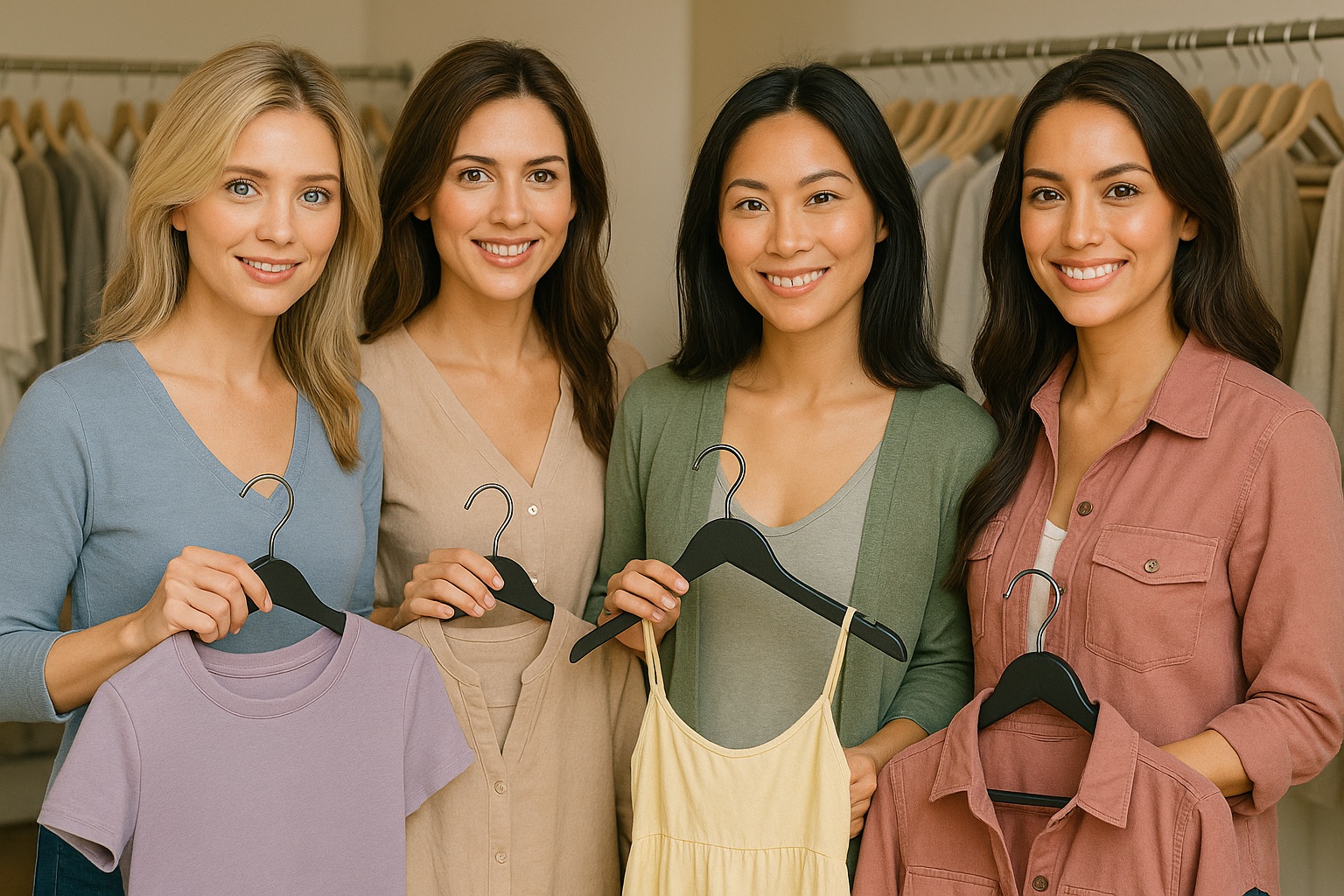
Beyond its core sizing functionality, Tellar has developed what it terms the Fashion Hub—a library of over 5,000 editorially-driven fashion posts created by in-house stylists. This content ranges from brand deep-dives (analysing how specific retailers cut their garments) to style guides and trend analyses.
This dual approach—technical precision married with editorial expertise—reflects a sophisticated understanding of fashion consumption. Sizing is rarely purely mathematical; it intersects with style preferences, fabric behaviour, and intended fit. A consumer seeking an oversized blazer requires different guidance than one looking for tailored shirting. By contextualising its sizing data within broader fashion discourse, Tellar acknowledges that "correct" sizing is ultimately subjective and style-dependent.
The Technology of Tomorrow's Wardrobe
Tellar's roadmap reveals ambitions that extend well beyond its current web-based platform. A forthcoming Chrome extension promises to surface sizing recommendations directly on retailer websites, eliminating the need to toggle between tabs. Enhanced profiles will allow users to specify fit preferences—whether they favour tight, regular, or loose cuts—refining recommendations accordingly. A mobile application is in development for in-store size checking, whilst saved profiles will enable instant lookups across shopping sessions.
These features point toward a future where sizing friction approaches zero—where the question "what size should I get?" becomes as obsolete as manually calculating currency conversions. In this vision, technology handles the complex mathematics of fit whilst consumers focus on aesthetics and style.
Implications for Industry and Consumer
Tellar's emergence reflects broader shifts in fashion's relationship with technology. As the industry grapples with sustainability imperatives and changing consumer expectations, tools that reduce waste and improve customer experience gain strategic importance. For retailers, lower return rates translate directly to improved profitability and reduced environmental impact. For consumers, confidence in sizing decisions means less time navigating returns logistics and more satisfaction with purchases.
Yet the platform also highlights a fundamental market failure. That a third-party tool is necessary to navigate sizing inconsistencies underscores how little standardisation exists despite decades of globalised fashion retail. Tellar succeeds precisely because the industry has failed to solve this problem itself.
Whether platforms like Tellar will eventually pressure the industry toward greater standardisation—or simply make the existing chaos navigable—remains to be seen. For now, it offers a pragmatic solution to fashion's most persistent technical challenge, one that prioritises consumer experience over industry convention. In an age where fashion increasingly intersects with technology, Tellar represents the kind of innovation the industry needs: practical, user-focused, and quietly transformative.
As fashion continues its digital evolution, the question may not be whether sizing tools become standard, but rather how quickly they become indispensable
The Tellar Fashion Hub is the World's Largest, 100% Free, Fully searchable, Fashion Library. Filled with 4000+ Honest & Unbiased posts, written by our expert stylists.
No adverts, no sponsored posts, no subscriptions. We are 100% free to use.
Honest, Unbiased, Accurate & Free.