; ?>)

The Sizing Revolution: How Fashion Tech Is Finally Solving Our Biggest Shopping Problem
By Robin Blake — Sizing Expert Stylist & Founder of TellarDate: 2025
Always Honest, Unbiased, Unsponsored & Free Content.
The data is damning: one in three online fashion purchases gets returned because of poor fit. But a new wave of measurement-based technology is quietly transforming how we shop—and it's about time.
We've all been there. You're browsing online, fall in love with a piece, agonise over whether to order your usual size or size up (because didn't that brand run small last time?), eventually order two sizes just to be safe, then spend your Saturday afternoon queuing at the post office to return the one that doesn't fit. It's exhausting, wasteful, and frankly, ridiculous that in 2025 we're still playing sizing roulette every time we shop.
But here's the thing: the problem isn't you. It's the entire broken system of clothing sizes—and finally, fashion technology is catching up to fix it.
The Real Problem With Size Labels
A UK size 10 should mean something consistent, right? Wrong. That size 10 could measure anywhere from 84cm to 92cm at the bust depending on which brand you're shopping. Add in the psychological manipulation of vanity sizing (where brands deliberately label larger garments with smaller numbers to flatter customers), international conversion chaos between UK, US and EU sizing, and the fact that even within a single brand, sizes can vary wildly between categories—and you've got a recipe for returns disaster.
The fashion industry has known about this problem for decades. But until recently, the solutions have been inadequate at best—generic conversion charts that ignore brand-specific quirks, AI recommendations based on your order history (useless if you've been buying the wrong size all along), or those irritating pop-up tools that only work on specific retail sites and never quite load properly.
What's been missing is a universal, measurement-based approach that actually works across the entire fashion landscape. Enter the new generation of sizing platforms that are finally treating this like the data problem it is.
The Technology Behind Better Fit
Tellar.co.uk, launched as the UK's leading independent sizing platform, represents exactly this shift. Rather than relying on algorithms that guess based on past purchases or crowd-sourced reviews that vary wildly in reliability, the platform takes a refreshingly straightforward approach: match your actual body measurements to verified size data from over 1,500 brands.
The technical innovation here isn't flashy—it's in the database architecture. Tellar has systematically catalogued and standardised size charts from everything from high-street giants like Zara and H&M to premium labels like Reiss and Toteme, creating what amounts to the largest cross-brand sizing database in the UK market. Each brand's sizing isn't just converted using basic formulas; it's mapped to account for how that specific brand actually cuts their clothing.
This matters because a size 12 at COS fits nothing like a size 12 at ASOS. COS tends toward slim, Scandinavian-minimal cuts with narrow shoulders and a longer torso. ASOS stocks multiple brands under one umbrella, each with different fit models. A measurement-based system accounts for these nuances in ways that label-to-label conversion simply cannot.
How It Actually Works
The user experience is deliberately simple: you enter three key measurements (bust, waist, hips) in either centimetres or inches, and the system instantly shows your size across any brand in its database. Alternatively, if you know you're reliably a size 10 in, say, Arket, you can enter that as your baseline and the system reverse-engineers your likely measurements to match you across other retailers.
What makes this approach genuinely useful is the specificity. Instead of telling you "you're between a 10 and a 12" (which is where most of us already are), it accounts for how specific garments are cut. A structured blazer from Massimo Dutti, which tends to run slim through the shoulders, requires different sizing logic than an oversized knit from Weekday, which is designed with deliberate ease.
The platform also addresses one of online shopping's most frustrating pain points: international sizing. British shoppers browsing French brands like Sezane or American retailers like Reformation no longer need to decode whether their UK 10 translates to an EU 38 or a US 6—the system handles the conversion automatically, factoring in not just the label difference but the actual fit philosophy of that brand's region.
The Fashion Implications
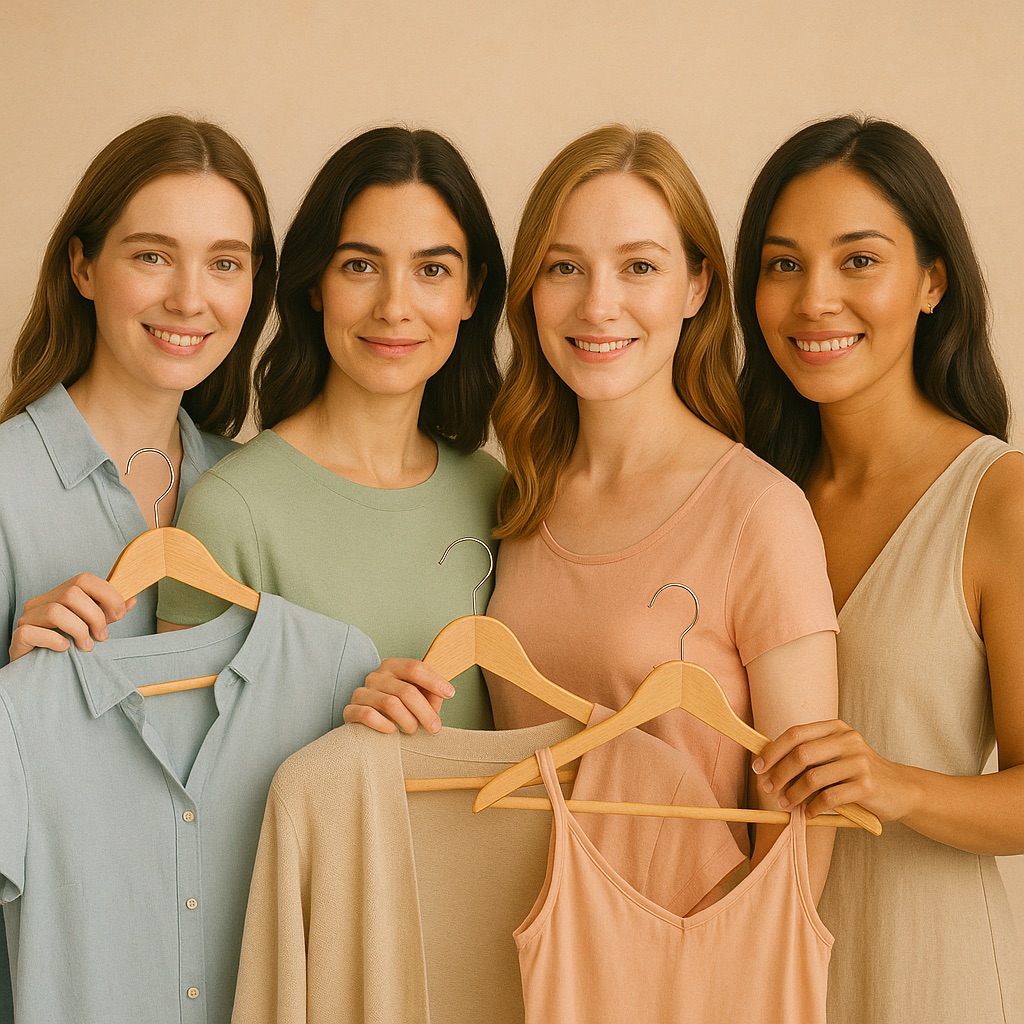
This isn't just about convenience—it's about fundamentally changing how we approach building a wardrobe. When you can shop with confidence across multiple brands knowing your size will be correct, it opens up your options exponentially. That niche Scandinavian label you've been eyeing but were nervous to try? The vintage-inspired French brand everyone's talking about? Suddenly accessible without the risk premium of expensive returns.
For sustainability-conscious shoppers, the impact is significant. Returns logistics contribute substantially to fashion's carbon footprint—garments being shipped back and forth, the energy cost of processing returns, items that get damaged in transit and can't be resold. Reducing returns by even 30% across the industry would represent a meaningful environmental gain.
From a fashion democracy perspective, accurate sizing technology also levels the playing field. Smaller brands and international labels that UK shoppers might have been hesitant to try due to sizing uncertainty suddenly become viable options. This could genuinely diversify what we see on the British high street—or rather, in our wardrobes.
The Broader Shift
Tellar's approach is part of a wider movement in fashion technology toward measurement-based solutions. While some retailers are experimenting with 3D body scanning and virtual try-on tools using augmented reality, the reality is that these high-tech solutions remain clunky and rarely work as advertised. The most effective innovations tend to be the unsexy ones: better data, smarter databases, more accurate matching algorithms.
What's particularly notable about platforms like Tellar is their independence. Unlike retailer-specific sizing tools that only work within one ecosystem and have an inherent incentive to encourage purchases (even potentially incorrect ones), an independent platform's value proposition depends entirely on accuracy. Get the sizing wrong, and users abandon the service immediately.
This independence also means comprehensive brand coverage. The platform includes over 1,500 brands from across the UK, European and US markets—high street, premium, luxury and niche labels all mapped within one system. It's the closest thing we have to a universal sizing standard, which the fashion industry itself has spectacularly failed to create through decades of fragmented self-regulation.
What This Means For How We Shop
Practically speaking, this technology shifts the mental calculus of online shopping. Instead of the familiar anxiety spiral—"Should I size up? What if it's too big? Maybe I should order both?"—you can make purchasing decisions with genuine confidence. Your Saturday afternoons can be reclaimed from returns queues.
It also changes how we think about our bodies in relation to clothing. Rather than internalising the frustration of inconsistent sizing as somehow being our fault (am I between sizes? Am I an awkward shape?), we can recognise it for what it is: a systematic failure of the fashion industry to standardise or even accurately label their products.
The future of fashion technology isn't about virtual reality wardrobes or AI stylists (though those have their place). It's about solving fundamental, practical problems that have plagued shoppers for decades. Getting the size right shouldn't be revolutionary—but in 2025, it still is.
The bottom line: If you've ever ordered multiple sizes of the same item or given up on a brand because you couldn't crack their sizing, measurement-based platforms represent the most significant advancement in online shopping since next-day delivery. The technology is simple, free to use, and genuinely effective. It's not flashy—but it works. And in fashion, that's increasingly rare enough to be worth celebrating.
The Tellar Fashion Hub is the World's Largest, 100% Free, Fully searchable, Fashion Library. Filled with 4000+ Honest & Unbiased posts, written by our expert stylists.
No adverts, no sponsored posts, no subscriptions. We are 100% free to use.
Honest, Unbiased, Accurate & Free.