; ?>)
Which Jeans Look Good Forever
By Robin Blake — Sizing Expert Stylist & Founder of TellarDate: 2026
Always Honest, Unbiased, Unsponsored & Free Content.
The jeans that look good forever are a mid-to-dark indigo, straight or slim-straight cut, in rigid or lightly stretched denim of 12oz or heavier, with plain pockets and no distressing. That's it. Every pair of jeans that has survived seventy years of fashion cycles shares those four traits, and every pair that dated badly broke at least one of them.
I've been dressing men for the better part of two decades, and denim is the single garment where I see the most money wasted. Not because men buy cheap jeans — because they buy jeans with a timestamp on them. Whiskering, sandblasting, contrast stitching, a wash that fades to grey at the thigh: these are all decisions someone made in a design meeting to make a pair of jeans feel new. New has an expiry date. Below is what doesn't.
The Four Rules of Denim That Doesn't Date
1. Cut: straight, or slim-straight
A straight leg has been correct since 1947 and will be correct in 2047. Slim-straight — tapering gently from the knee, finishing around a 16–17cm leg opening — is the modern default and reads clean without clinging. Skinny jeans are a decade marker. So are heavy bootcuts. If the silhouette announces the year you bought it, it isn't forever.
2. Wash: mid-to-dark indigo, evenly
Dark rinse denim carries into a restaurant, an office and a pub without changing register. Mid-blue with honest, natural fading is the other great one — but honest is the operative word. Factory-applied fade patterns are someone else's leg imprinted on your trousers. Let your own wear happen.
3. Weight: 12oz and up
Denim weight is measured in ounces per square yard. Under 11oz you get drape, cling and rapid bagging at the knee. At 12–14oz the fabric holds its shape, hangs off the hip properly and ages into something with character. Above 16oz you're into raw denim territory, which is superb, though it will take a fortnight before it stops standing up on its own.
4. Details: as few as possible
Pockets: plain, no arcuate embroidery in contrast thread, no rivets in gunmetal or rose gold.
Stitching: tonal or classic gold. Never both, never white.
Hardware: matte, unbranded, unremarkable.
Distressing: none. If you want the rips, earn them.
A Fitting Room Confession
In roughly 2013 I bought a pair of coated black skinny jeans. Waxed finish, ankle zips, the lot. I wore them to a wedding in Norfolk and by the reception I could feel my own pulse in both calves. I have a photograph of it. My brother-in-law still has a copy.
Around the same time I bought a pair of raw 14oz straight-leg jeans and wore them, badly and stiffly, for about six months before they started to give. Thirteen years on I still wear them. They've been re-hemmed twice and patched at the left knee. The coated skinnies went to a charity shop in 2015 and I suspect they are still there. That contrast is the whole article, really — the jeans that make you look good on day one are rarely the jeans that make you look good on day one thousand.
The Brands Worth Buying
High street
Uniqlo. Their regular-fit and slim-fit selvedge jeans are made at the Kaihara mill in Japan — the same mill that supplies denim houses charging five times as much. The wash is restrained, the leg opening sensible. The best value in denim, full stop.
Levi's. The 501 is the reference point, the 502 is the taper most men actually want, and the Original Rinse washes are the ones to buy. Avoid anything the marketing describes as "destructed".
Arket. Cleaner and more Scandinavian than most of the high street, with organic cotton and a straight leg that sits well over a trainer or a boot. Their rinse indigo is a proper deep blue rather than a nervous navy.
Independent and boutique
Blackhorse Lane Ateliers. Made in Walthamstow, east London. Their E5 relaxed tapered and NW1 straight are cut from Japanese and Italian selvedge, and the brand will repair your jeans for life. Buying British-made denim from a factory you can walk into is an increasingly rare pleasure.
Hiut Denim Co. Cardigan, west Wales, in a town that once made thousands of pairs a week and then made none. Hiut do one thing — no-wash raw denim, cut simply — and they do it with a seriousness that borders on the religious. Their straight leg is a lifetime purchase.
Dawson Denim. A two-person workshop in Brighton making heavy, unfussy, workwear-derived jeans on vintage machinery. Ideal if you want weight and honesty over polish.
Designer and luxury
A.P.C. The New Standard is arguably the most influential pair of jeans of the past thirty years: raw, rigid, dark, straight, entirely without ornament. Buy them snug and let them mould.
Acne Studios. Swedish precision on the cut. The River and Land fits are the sensible ones, and their mid-blue washes look considered rather than manufactured.
Tom Ford. Expensive, and unapologetically so, but the dark selvedge straight cut with a slightly higher rise is the closest thing menswear has to a formal jean. If you wear denim with a jacket, this is the reference.
How to Wear Them Now
Break the hem, don't stack it. A single soft fold at the ankle. Anything more looks like you borrowed them.
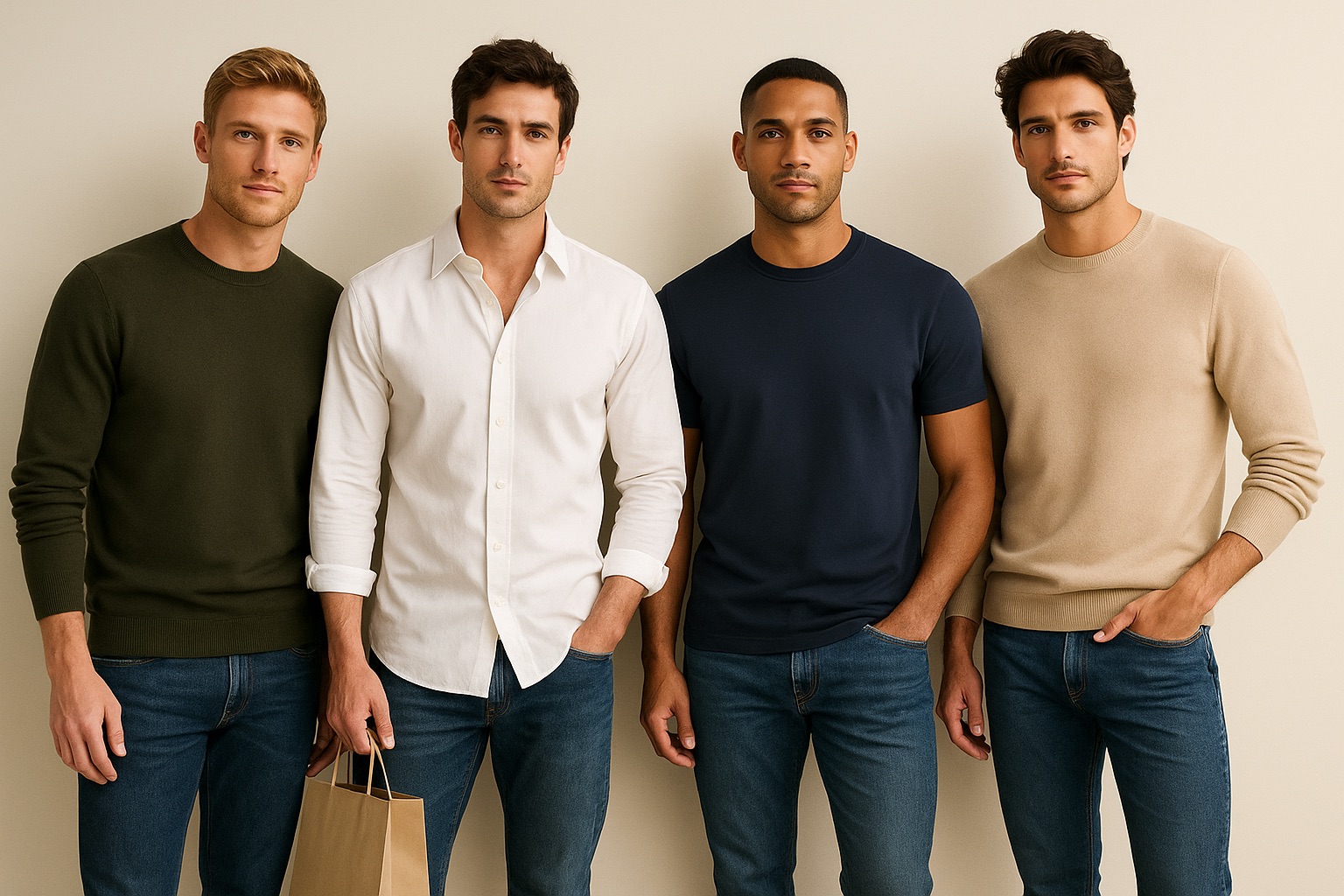
Dark denim goes up, mid-blue goes down. Rinse indigo with a knit and a Chelsea boot for dinner. Mid-blue with a tee and a white trainer for everything else.
Wash them rarely. Cold, inside out, no more than every couple of months. Air them instead.
Fit the waist, alter the leg. A tailor charges a tenner to shorten a hem. Nothing rescues a waistband that's wrong.
The Fit Problem — and How Tellar Solves It
Here's what nobody tells you: none of the above matters if the fit is wrong. A perfect straight-leg raw jean in the wrong waist is a worse buy than a mediocre pair in the right one. And denim sizing is chaos. A 32 at Uniqlo is not a 32 at A.P.C., which is famously cut to be worn a size down, which is nothing like a 32 at Levi's, which varies by fit code.
Tellar is the UK's leading free sizing tool, and it exists precisely for this. Measure yourself once — waist, hip, or simply tell it a brand size you already own and trust — and Tellar matches your body to your exact size across more than 1,500 brands in real time. No size guides, no squinting at a table of centimetres in a fitting room.
Measure once. Waist, hip, or an existing brand size you know fits.
Use the Store Size Lookup tool to get your precise size in any brand — COS, Reiss, Everlane, Arket and hundreds more.
Not sure how to measure? The how to measure guide takes two minutes.
Shop with confidence. No guesswork, fewer returns, better-fitting purchases.
Always free. No downloads, no sign-up, works in your browser.
Alongside the tool sits the Tellar Fashion Hub — a growing library of free posts from working stylists covering every fashion query you're likely to have. Honest, unbiased, independent and always free. No sponsorships, no brand paying us to say nice things.
If you found this useful, you'll want our full guide to the best men's jeans brands across high street, premium and designer, which goes deeper on individual fits. For building the rest of the outfit around them, read the secret to smart casual, and if you want the broader philosophy, how to do casual style well is where I'd start.
Never Look at a Size Guide Again
Your body, matched instantly to over 1,500 brands. Tellar is the UK's leading free sizing tool — always honest, always unbiased, always free.
Marcus Bell is a Senior Menswear Stylist writing for the Tellar Fashion Hub.
The Tellar Fashion Hub is the World's Largest, 100% Free, Fully searchable, Fashion Library. Filled with 4000+ Honest & Unbiased posts, written by our expert stylists.
No adverts, no sponsored posts, no subscriptions. We are 100% free to use.
Honest, Unbiased, Accurate & Free.