; ?>)

Why Is My Jeans Fit Different in Every Brand?
By Ella Blake — Sizing Expert Stylist & Founder of TellarDate: 2026
Always Honest, Unbiased, Unsponsored & Free Content.
The number on the waistband is a marketing label, not a measurement. There is no legal standard for jeans sizing anywhere in the UK, US or EU. Every brand drafts its own pattern block, sets its own target customer, allows its own manufacturing tolerance, and picks its own denim — and any one of those four things will move the fit by an inch or more. A 32 at Levi's, a 32 at Acne Studios and a 32 at Next are three different garments that happen to share a number.
The short answer
Vanity sizing is real and it's measurable. When Esquire tape-measured nominal 36in trousers across US retailers, the actual waistbands came out anywhere from 37 to 41 inches. A UK study a year later found more than half the garments checked were mislabelled, the worst by up to two inches.
Brands allow themselves a tolerance. Factories are typically permitted a variance of up to an inch on the finished garment. Two pairs of the same jean, same size, same shop, can legitimately differ.
The rise decides where the waistband lands — and therefore what part of your body it has to go round. A low rise sits on your hip, a high rise on your natural waist. Same body, two different circumferences.
Elastane changes everything. Two per cent stretch will give you two inches of forgiveness. Rigid denim gives you none on day one and up to an inch and a half after a fortnight.
The label is a number the brand chose, not a number they measured
Here's the part most men have never been told: men's trouser sizes were originally meant to reflect the wearer's waist, not the garment's. The pattern is drafted on a size block, then cut off at the hip line, so the finished waistband is always bigger than the tag. Around two inches bigger is honest. Four inches is a brand flattering you into a purchase.
Nobody polices this. France legislates garment measurements; Britain doesn't. So a high street label chasing volume will size generously — happy customer, fewer changing-room walkouts. A designer house dressing a narrow silhouette will size mean, because the cut is the point. Neither is lying. They're just answering different questions.
Every brand cuts from a different block
The block is the master pattern a brand builds everything from. It encodes an imaginary man: his waist-to-hip ratio, his seat, his thigh circumference. Change the block and you change the jean, even if the waist tape reads identically.
Rise. The distance from crotch seam to waistband. Anything under 9.5in is low, 10–11in is mid, 11.5in and up is high. A high rise on a low-rise body creates that stack of fabric at the front you can't iron out.
Seat and thigh. Two jeans with the same waist and leg opening can be an inch apart across the seat. This is why cyclists and anyone who squats can't wear most slim fits regardless of waist.
Leg opening. The number that actually determines whether a jean reads slim, straight or wide — not the fit name on the tag.
Country of drafting. Japanese denim brands cut for a shorter, narrower frame. Scandinavian labels cut long. Italian houses cut high through the seat and slim in the thigh.
The fabric is doing half the work
Look at the composition label before you look at the size. This one habit will save you more grief than anything else in this article.
100% cotton, rigid. Zero give in the shop. Expect it to relax roughly an inch to an inch and a half at the waist within two weeks of wear. Buy it snug — genuinely, uncomfortably snug when you're standing still.
98/2 cotton-elastane. The most common blend on the high street. Two per cent gives you around two inches of stretch and about half of that becomes permanent bagging by the end of the day. Buy these true to size, never up.
Anything above 3% elastane. Comfortable, but the knee and seat will blow out. Fine for a workhorse, not for a jean you want in three years.
Raw and unsanforised. Rare, brilliant, and it will shrink. Sanforised denim is pre-shrunk. Unsanforised can lose up to 10% on first soak. If the brand doesn't tell you which it is, assume sanforised.
And the same brand isn't consistent with itself
Levi's 501 and 511 are not the same waist. They were never designed to be. Fit names are internal shorthand, not a shared language — one label's "slim" is another's "regular", and brands quietly re-cut styles every few seasons without changing the style number. The jeans you loved in 2019 are not the jeans arriving in that same size today. This is not you imagining things.
Years ago I bought a pair of Japanese selvedge in a 32 because that's what I "am". Rigid, unsanforised, gorgeous. I could barely do the button up in the shop and told myself I'd break them in. What I hadn't clocked was that they were unsanforised and I hadn't soaked them yet. First wash, they came out a 30. I gave them to a friend and bought a 34 the following month, wore them for six years, and they're still the best pair I've owned. The lesson wasn't "buy bigger" — it was "read the fabric before you read the tag".
How to buy jeans that actually fit
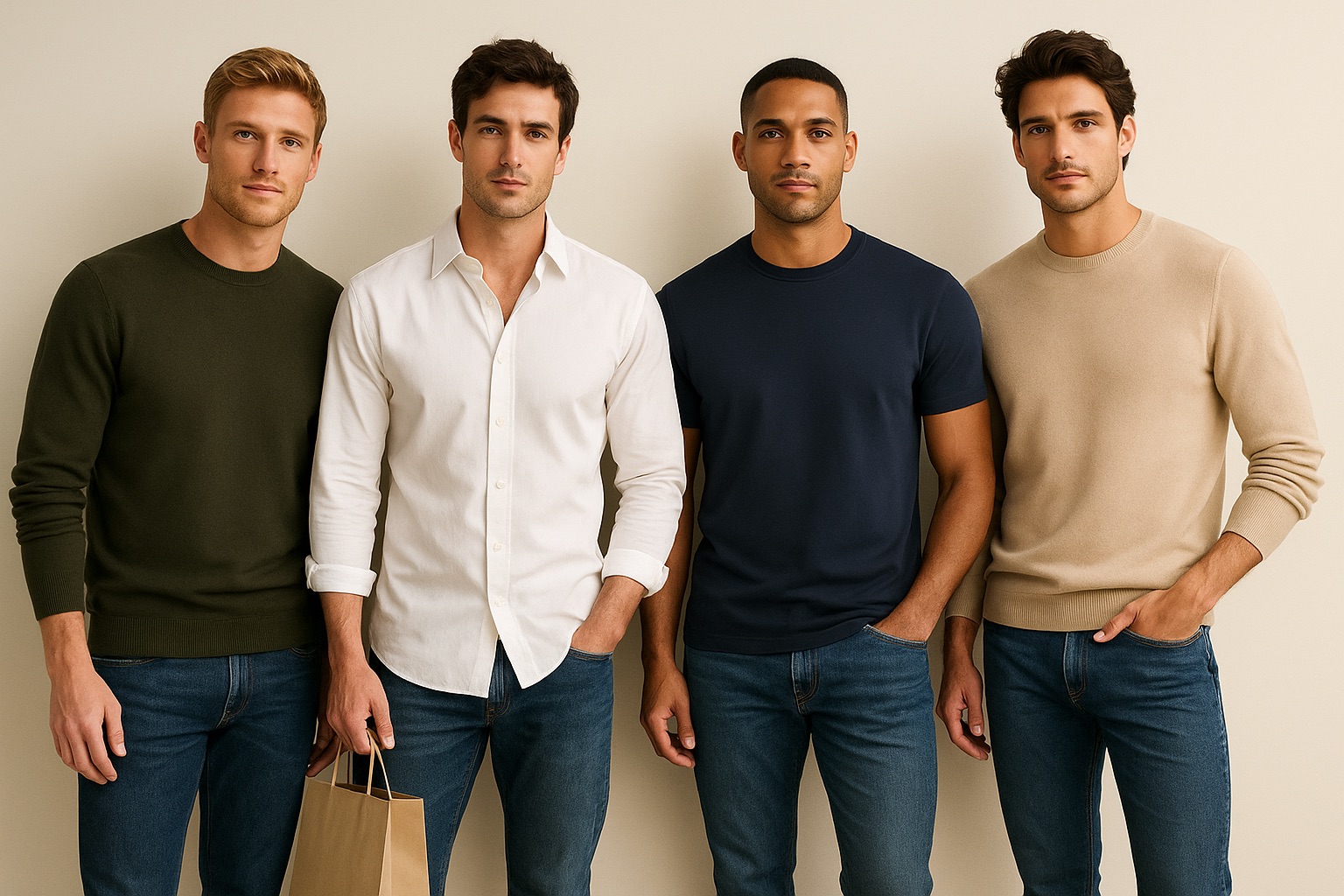
Stop shopping by your size. Shop by your measurements. Know your natural waist and, crucially, where you actually wear your trousers. Those are two different numbers.
Measure a pair you already love. Lay them flat, buttoned. Measure the waistband edge to edge and double it. That number — not the tag — is what you're looking for on a brand's size chart.
Check the leg opening, not the fit name. Under 15cm is skinny. 16–18cm is a modern straight. 20cm plus is genuinely wide.
Factor in growth. Rigid: buy at your true waist, it'll relax. Stretch: buy true to size, it'll bag. Never buy stretch denim with room in it.
Buy the inseam long and hem it. A £20 hem on a £90 jean is the highest-return money in menswear. Off-the-peg leg lengths are a compromise nobody asked for.
The denim brands I actually recommend
High street
Levi's. Still the most honest sizing on the high street, because the 501 has been cut from broadly the same block for a century. Buy rigid 501s at your true waist and let them settle. The 511 and 512 run about half an inch tighter through the seat.
Gap. The most generous of the mainstream labels — genuinely vanity-sized. If you're a 34 elsewhere, try a 33 here before you commit. Excellent value in mid-weight stretch denim and their straight fit has quietly become one of the best-cut cheap jeans in Britain.
Next. Underrated, and the only high street name doing a proper range of leg lengths as standard, which solves the hemming problem for most men. Cut generously through the thigh — a good shout if you're built through the leg.
Independent & boutique
Hiut Denim Co. Made in Cardigan, West Wales, in a town that used to make jeans for a living and now does again. Rigid, honest, no stretch, no nonsense. Sizing is true and unflattering in the best sense — it tells you the truth about your waist.
Nudie Jeans. Swedish, organic cotton, and they'll repair your jeans free for life at their repair shops. Sizing runs slim and Scandinavian-long; most men take a size up from their Levi's number, particularly in the drier fits.
Blackhorse Lane Ateliers. East London, selvedge, made in the UK, and they'll do a made-to-measure pair if you want to stop guessing entirely. The most expensive advice in this list but the only one that ends the conversation permanently.
Designer & luxury
Acne Studios. The Blå Konst line is the benchmark for a modern loose straight leg. Cut long and lean; size true at the waist, expect the leg to be dramatic. Nobody does a mid-blue wash better.
Jeanerica. Quietly the best-value premium denim going. Swedish, sustainably made, and the fits are named with unusual honesty. True to size, and their tapered cuts flatter almost every build.
Saint Laurent. The reference point for a rock-and-roll slim jean, and sized accordingly — mean through the waist, meaner through the thigh. Most men need to go up a full size. Buy these knowing exactly what you're buying.
What's actually working in 2026
The skinny jean has finished its long retreat and we've landed somewhere sensible. The silhouette that looks right now is a mid rise, a relaxed straight leg, and a leg opening around 18–20cm — enough room to stack lightly over a boot or sit clean on a trainer. Rigid denim is back in a real way, as is a mid-blue wash with honest fading rather than factory whiskering.
Styling it is simple. Let the trousers be the volume and keep everything above the waist quiet: a fine-gauge crewneck, a plain oxford, a chore jacket. If you're wearing a wide leg, tuck. If you're wearing a straight leg, don't. And spend the money you saved on a decent belt and a hem.
Never look at a size guide again
Everything above explains why the sizing is broken. Tellar is the fix. It's the UK's leading free sizing tool — measure yourself once, and we match your body to your exact size across 1,500+ brands instantly.
Measure once using your chest, waist and hip — or just tell us a brand size you already own and trust. Then use the Store Size Lookup to get your precise size in any brand: Levi's, Gap, Next, COS, Reiss, Arket and hundreds more. Shop with confidence, guess less, return less.
Always free. No downloads, no sign-up, works straight in your browser. And the Tellar Fashion Hub is a growing library of free posts from our stylists covering every fashion query going — style advice, top picks, best brands. Honest, unbiased, independent, always free.
TRY THE STORE SIZE LOOKUPHOW TO MEASURE (MEN)
More from the Tellar Fashion Hub
Tellar is always honest, always unbiased and always unsponsored. We never take a penny to recommend a brand — every word is our own.
The Tellar Fashion Hub is the World's Largest, 100% Free, Fully searchable, Fashion Library. Filled with 4000+ Honest & Unbiased posts, written by our expert stylists.
No adverts, no sponsored posts, no subscriptions. We are 100% free to use.
Honest, Unbiased, Accurate & Free.